Teacher Training Program
The Hilary Opheim Pilates Teacher Training program is the official school of TPMC, an NPCP Verified School. We are also proud to be a Gratz Partner Program. You can find us listed on both NPCP and Gratz sites, as well as Balanced Body Contrology schools.
Hilary Opheim Pilates Teacher Training Program is listed on the NPCP School Directory as a Verified Program, confirming that our teacher training meets the eligibility requirements and industry standards for graduates to sit for the NPCP exam(s). Each year, we are reevaluated based on industry standards to ensure our program continues to meet industry standards by an NCAA-accredited program.
Comprehensive Pilates Teacher Training Program:
This comprehensive, traditional-style Pilates Teacher Training Program is meticulously designed to equip aspiring teachers with the knowledge, skills, and practical experience necessary to teach Pilates safely and effectively on all apparatus. Our program adheres to the highest industry standards, preparing graduates for the NPCP (National Pilates Certification Program) certification exam and fostering critical thinking skills for a successful career in any Pilates environment.
-
Acceptance to the program is based on:
Student having an introductory understanding of Pilates
Minimum 2 years of experience practicing Pilates
Desire to learn the Pilates Method beyond simple memorization of exercises
Availability to commit to a year-long program
-
Enrollment is open all year long, with start dates in Fall/Winter and Spring/Summer. Once the application is received and reviewed, an interview will be scheduled with the program director. Based on the combined interview, application review, and assessment of the student’s Pilates experience and goals, if the student is admitted, they will then begin the program. After the student is admitted and enrolled, they have the opportunity to join the Pre-enrollment Program.
-
Program Overview:
Total Program Hours: 600 hours
Weekly Recommended Hours: 10-15 hours
Expected Program Time for Completion: 15-18 months
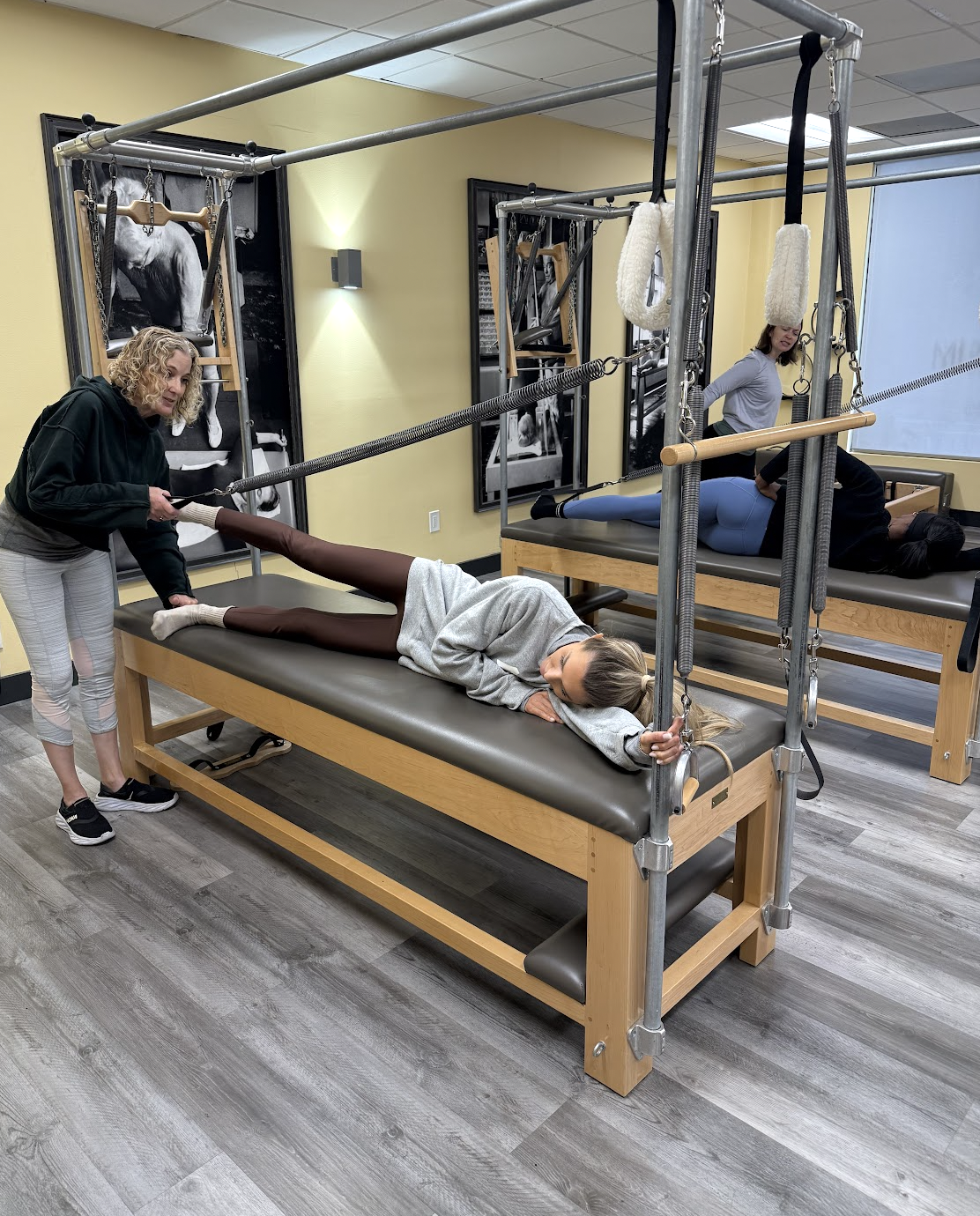
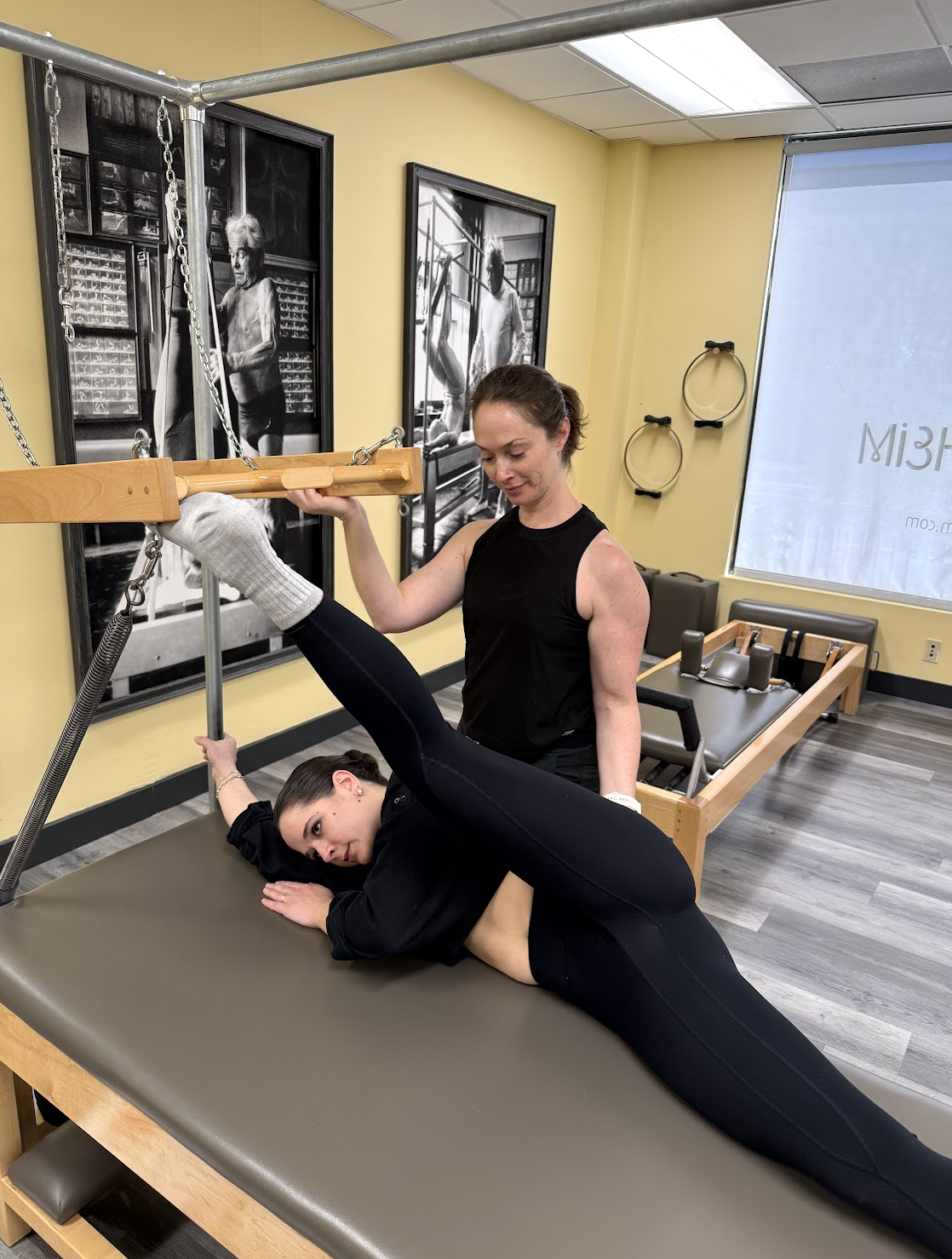
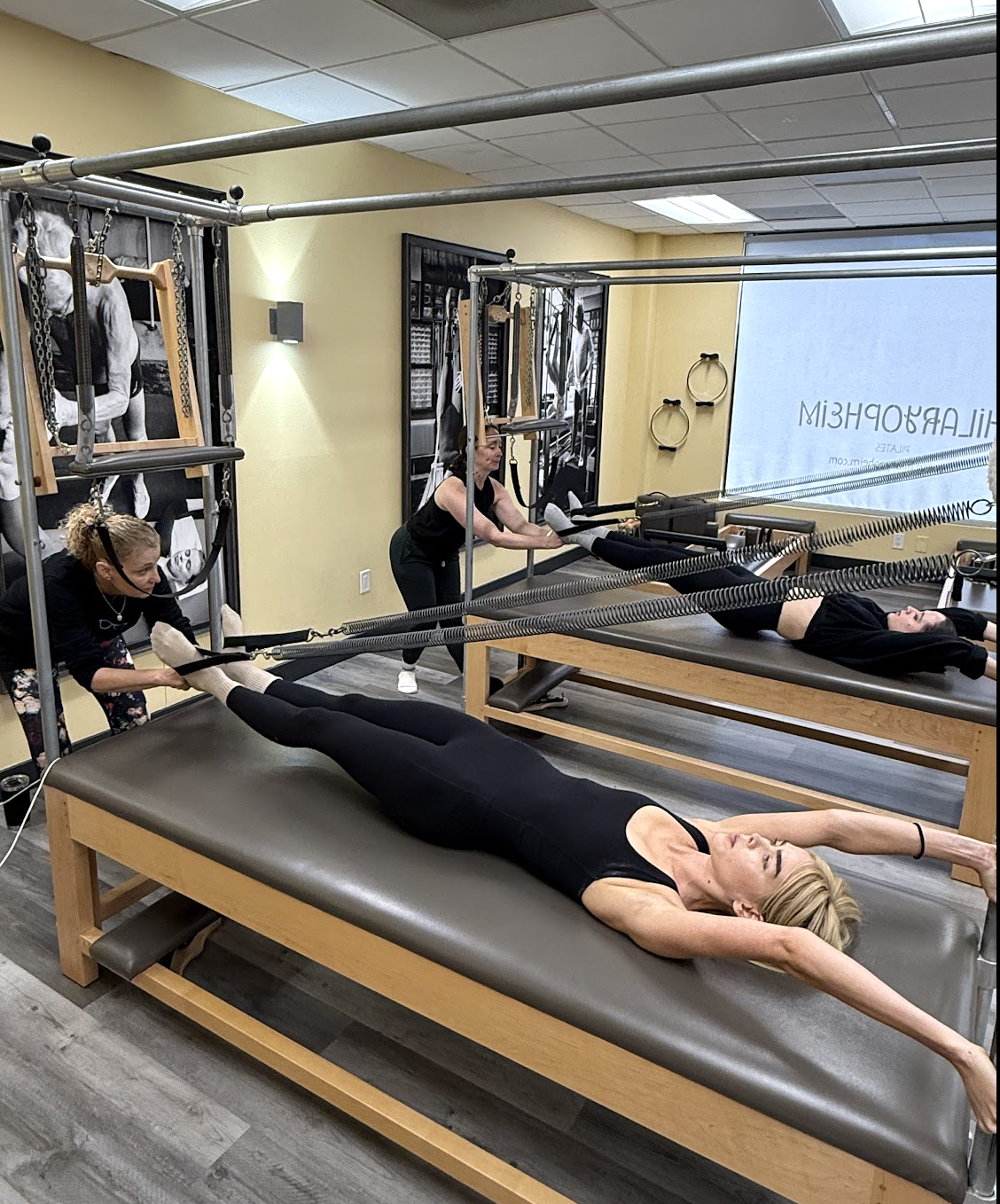
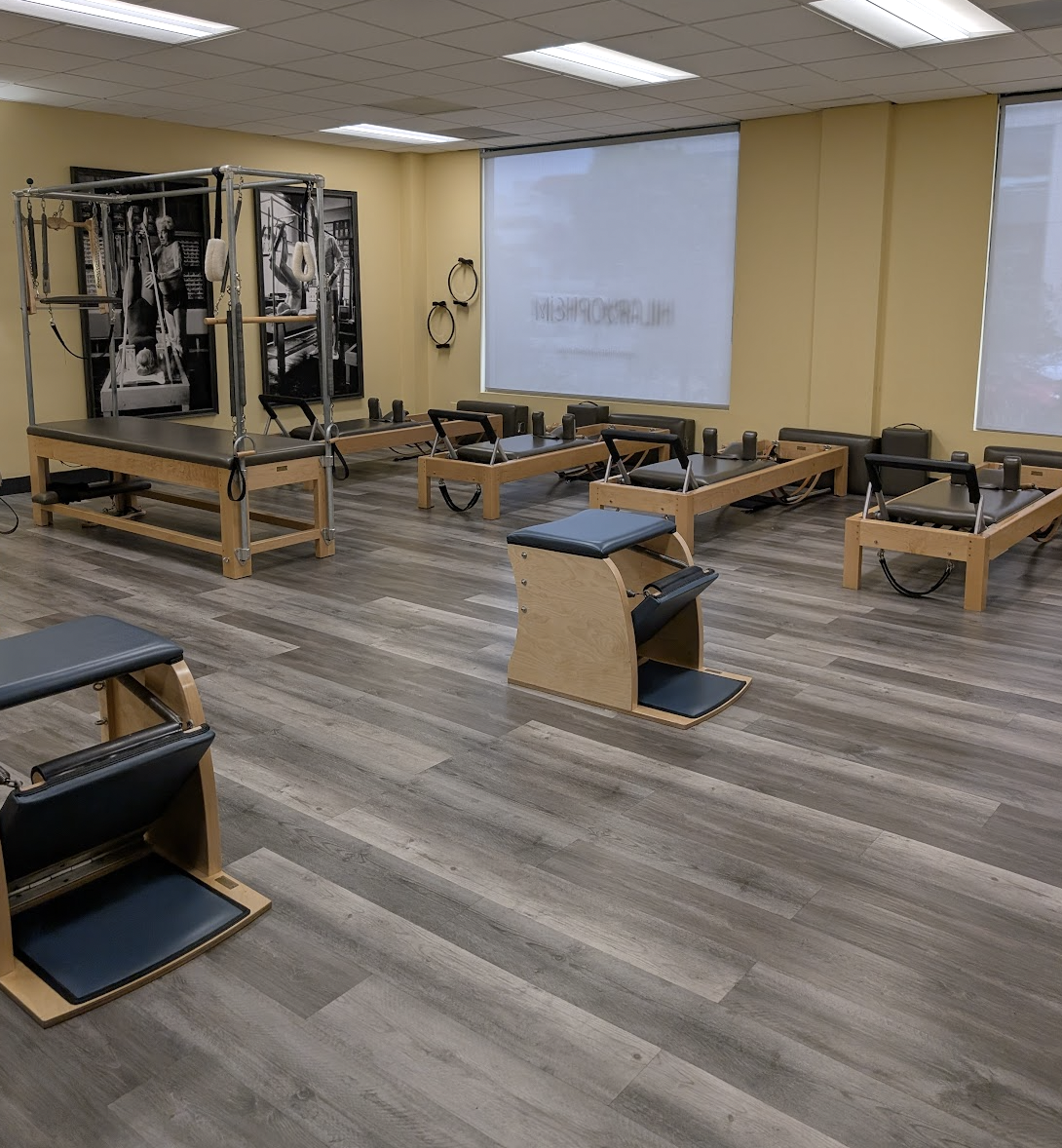
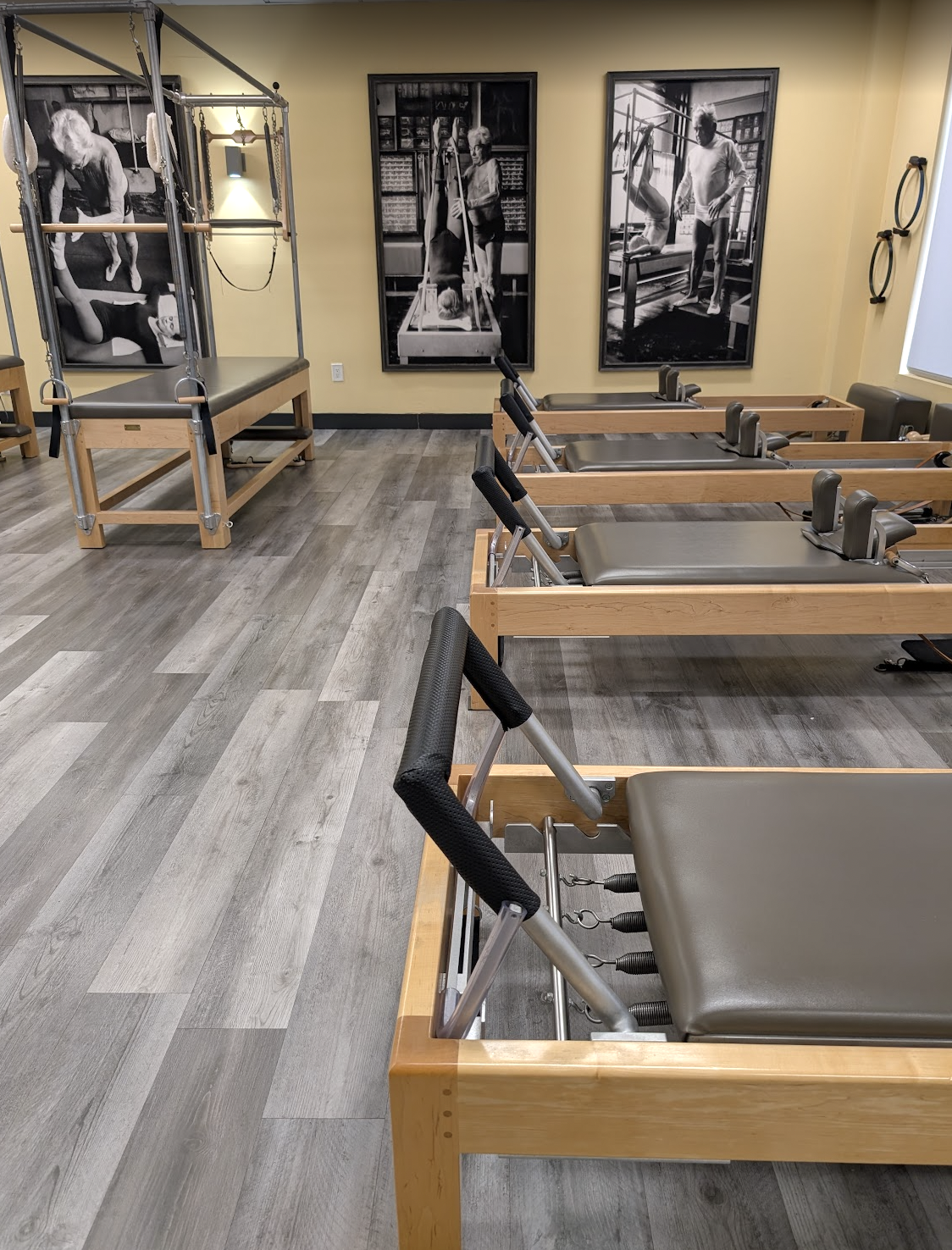
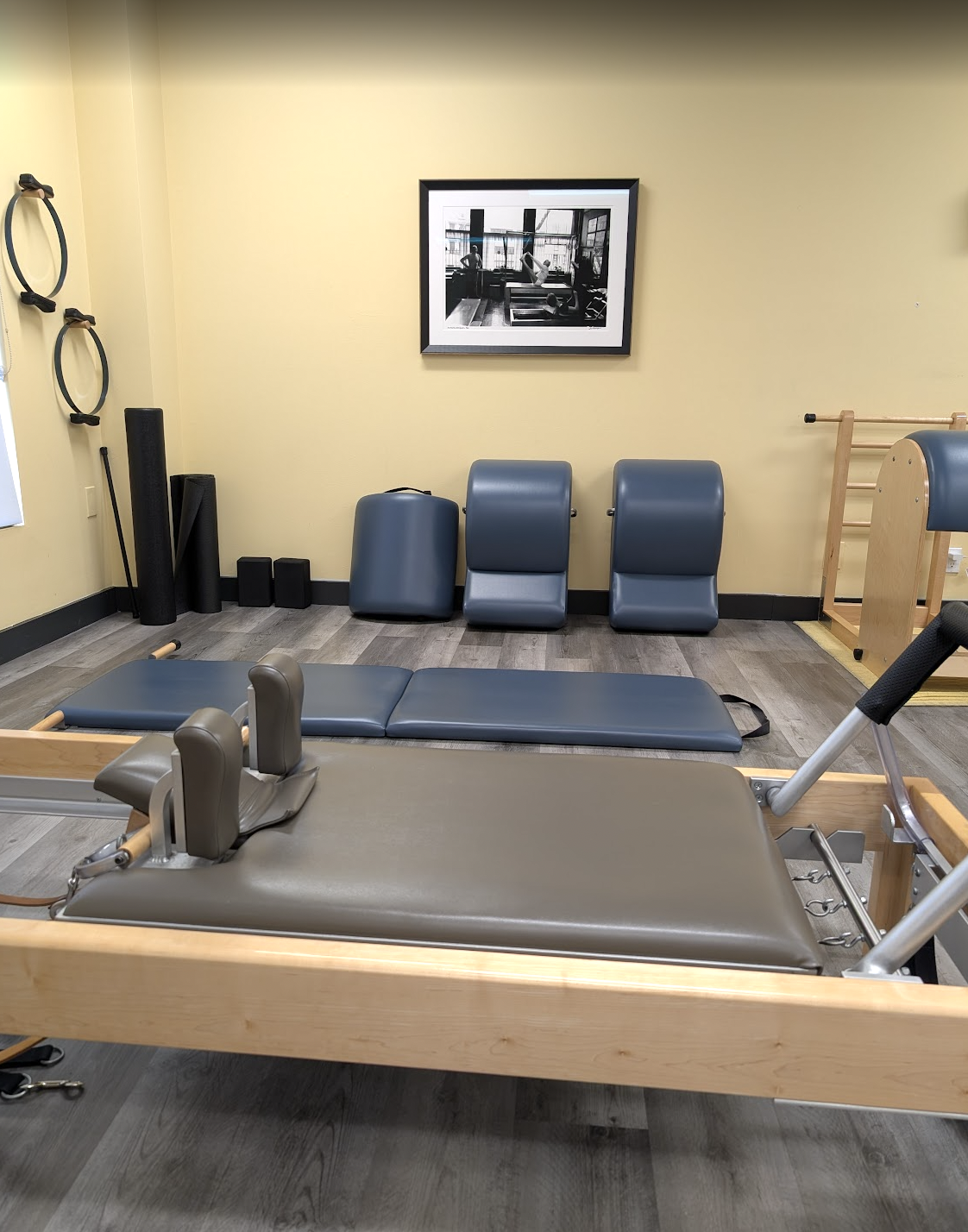
Apparatus Covered: Mat, Reformer, Trapeze Table (Cadillac/Tower), Wunda Chair, High Back Chair, Ladder Barrel, Spine Corrector/Small Barrels, Magic Circle, Ped-o-Pull, Foot Corrector.
Program Mission: Empowering aspiring Pilates teachers through a mentor-apprentice style of learning, fostering critical thinking to deeply understand the "why and how" of the full Pilates system, enabling confident and adaptive teaching.
-
Our program is structured across several key standards, ensuring a well-rounded and deeply immersive learning experience. The program is designed as 1-1 and small groups, enabling it to be adjustable for each student to accommodate scheduling needs and learning styles.
Standard 1: Learning Hours (50 hours)
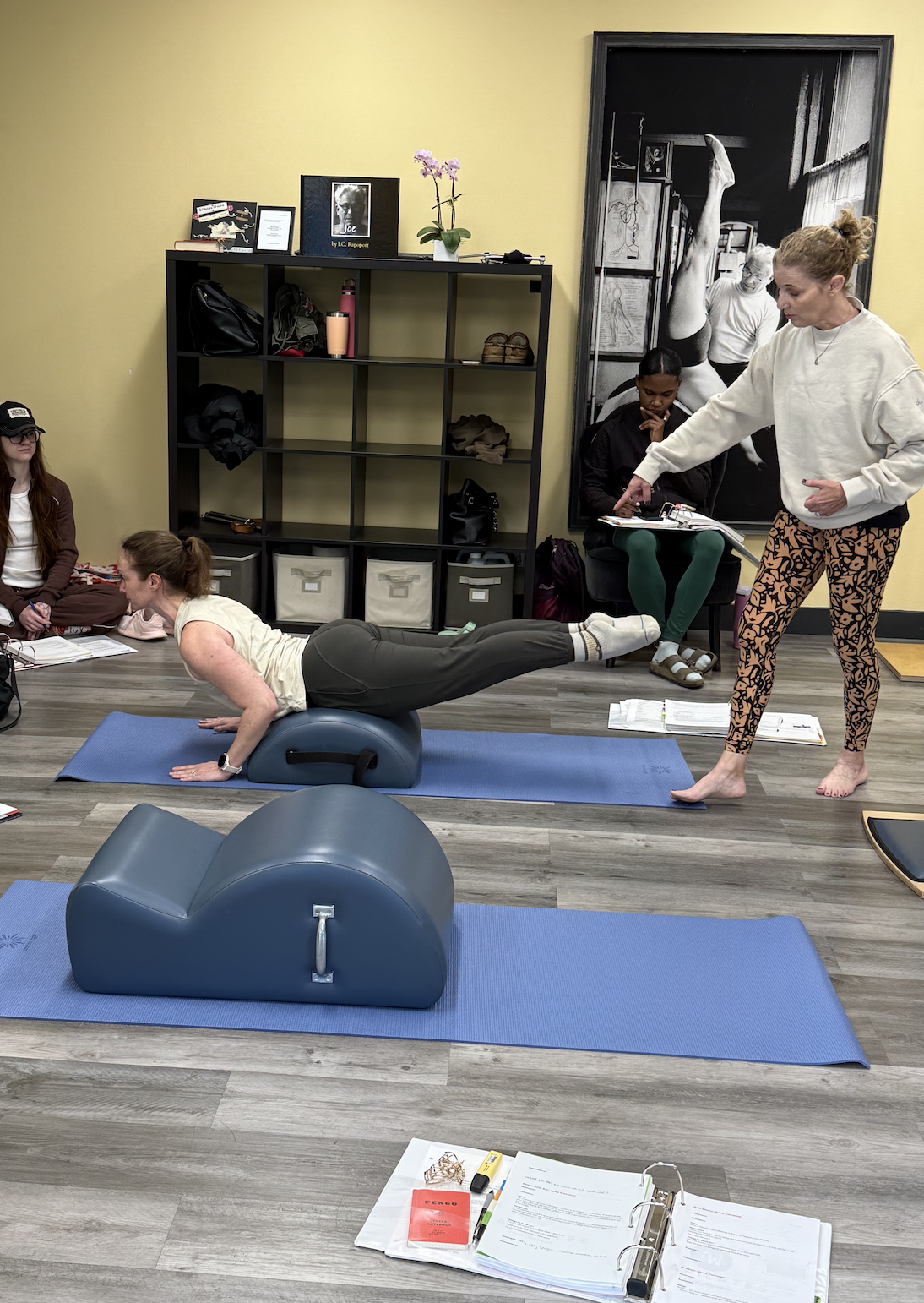
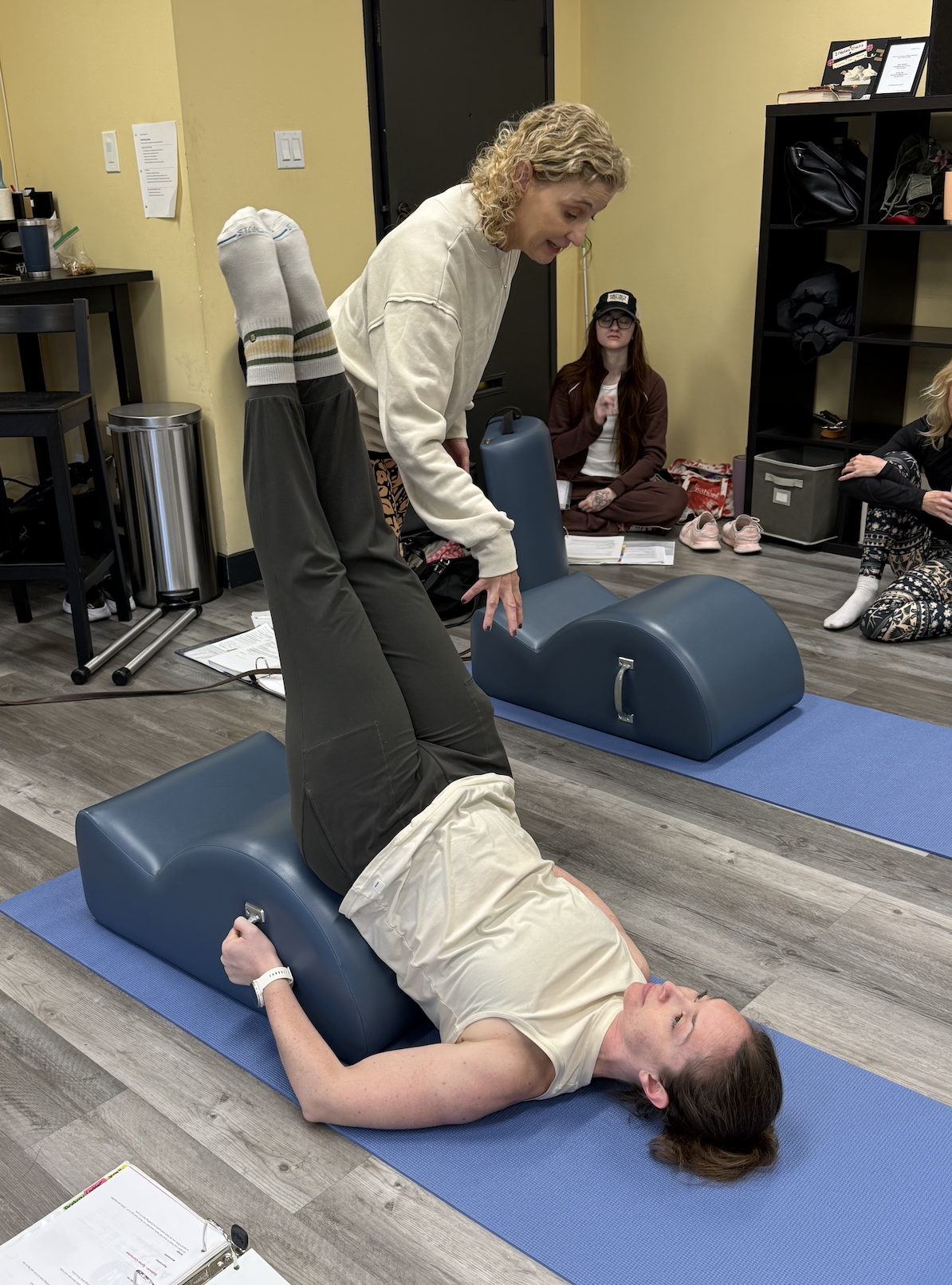
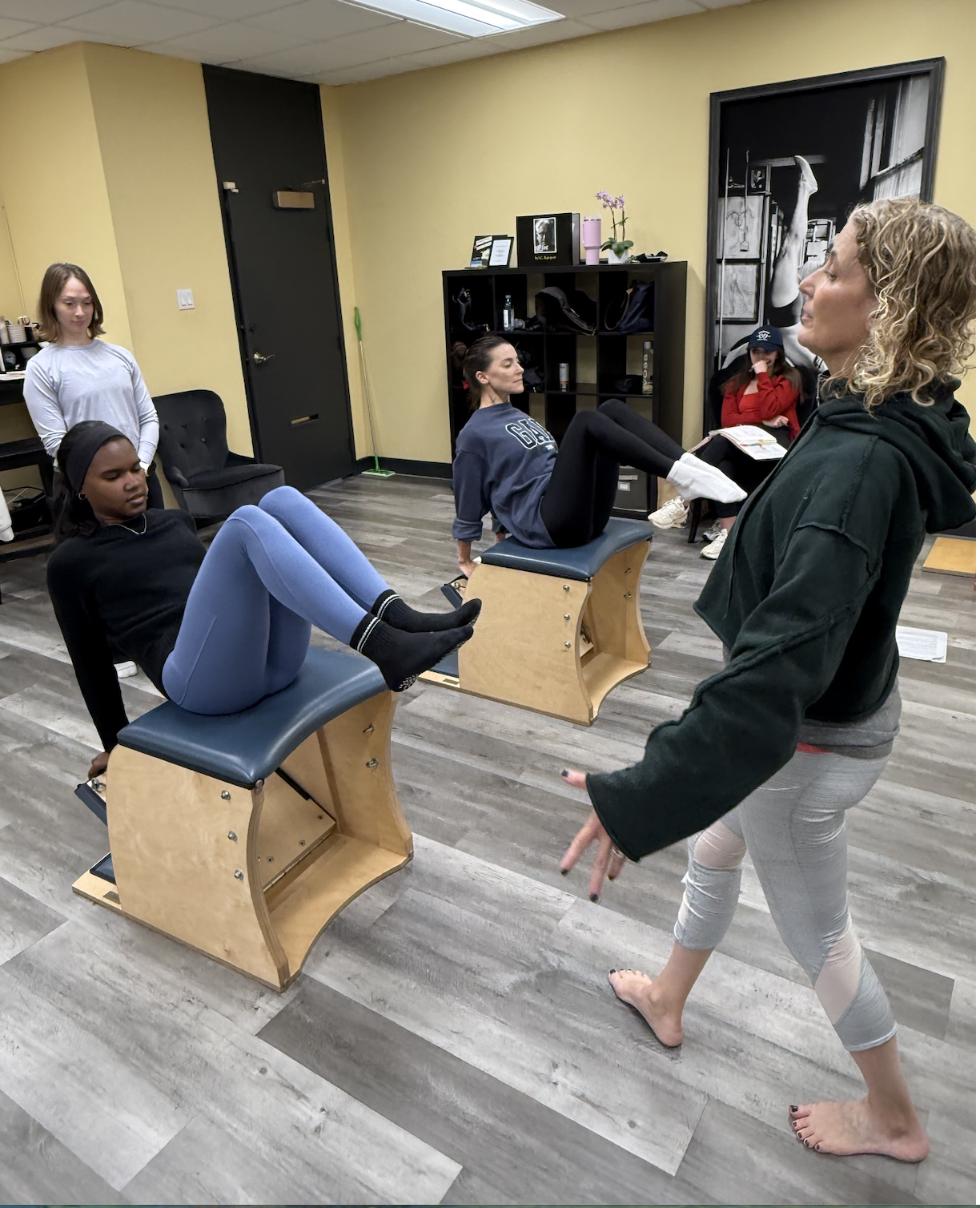
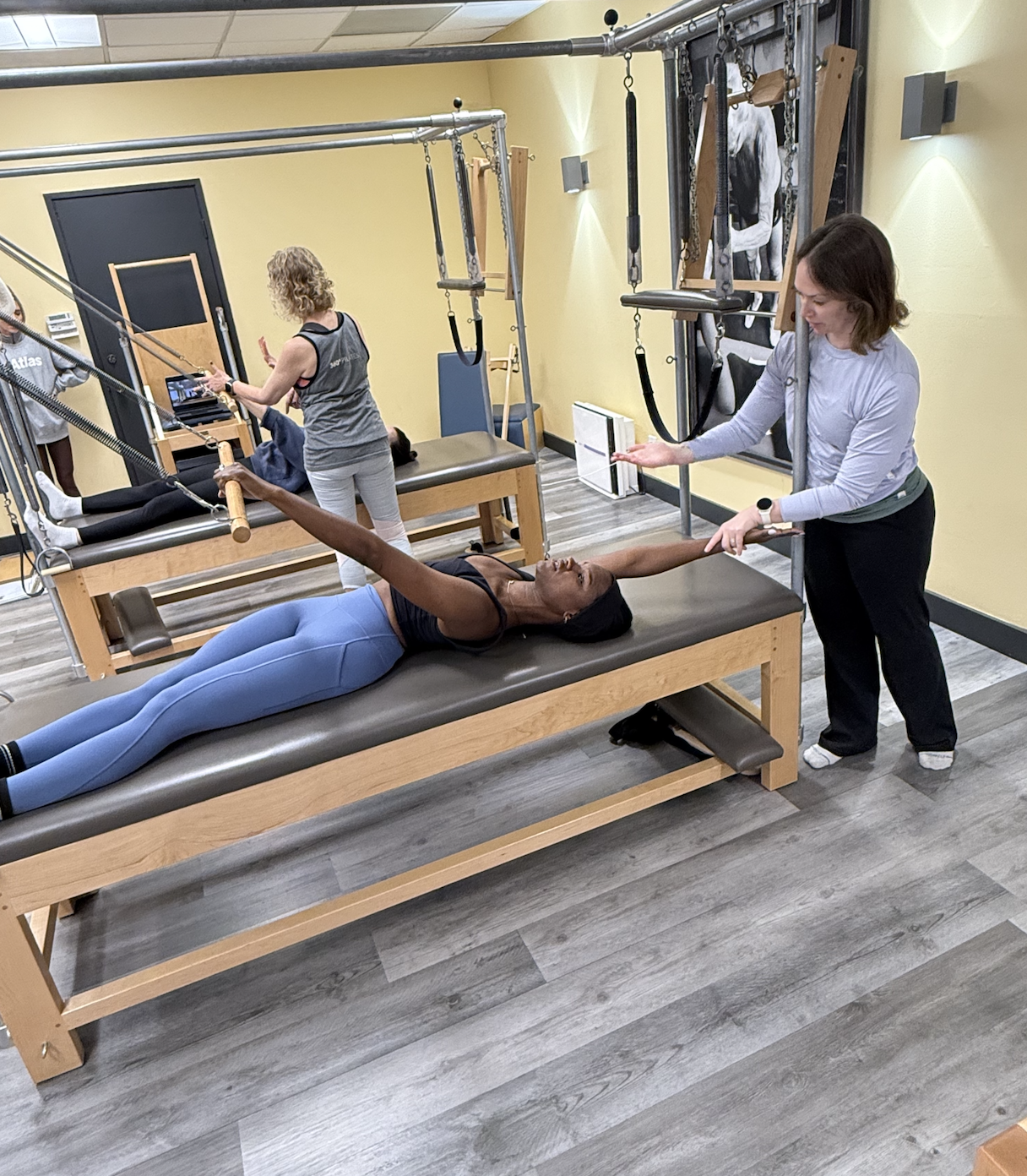
This foundational component provides in-depth theoretical and practical knowledge, covering all essential aspects of Pilates. Learning weekends include exercises on all Pilates apparatus, movement pedagogy, and special topics lectures.
Learning Topics:
Introduction & Teaching Philosophy: Program overview, teaching methodologies, and core Pilates principles.
History of Pilates: Exploring the origins and evolution of the Pilates method and Joseph Pilates' work.
Teaching & Cueing Techniques: Developing effective verbal, tactile, and visual cueing, observation skills, and client interaction strategies.
Mat Pilates: Comprehensive repertoire, modifications, and progressions for Mat work.
Reformer: In-depth study of the Reformer repertoire, safety, and program design.
Cadillac/Tower (Trapeze Table): Comprehensive repertoire, safety, and application of the Cadillac/Tower.
Wunda Chair & High Back Chair: Repertoire, modifications, and progressions for both chairs.
Barrels (Ladder Barrel & Spine Corrector): Comprehensive exercises, applications, and safety considerations.
Magic Circle & Ped-o-Pull, Foot Corrector, & Other Small Apparatus: Integration of smaller apparatus for enhanced workouts and specific conditioning.
Special Topics Lectures:
Anatomy & Assessment/Movement Science: Comprehensive study of human anatomy relevant to Pilates, basic movement science, and biomechanics. 2 hours live online.
Precautions & Conditions: Adapting Pilates for various special populations and common conditions, including considerations for sensitivity issues. 2 hours live online.
Before the Hundred: Intro to Kathy Grant materials to use as tools to assist clients with the Traditional work. 3 hours in-studio.
Key Concepts: Learn how to build a client’s session through the main movement concepts of each exercise and how to analyze individual needs. 2 hours online.
These intensive weekends form the core of the lecture component, providing hands-on instruction and practice. One day each month, for up to but not exceeding 10 sessions, a 4-hour course to learn all exercises. Once all choreography is learned, virtual monthly office hours will take place until the student has completed all necessary hours of the program.
Specific Dates are TBD, and the exact length of the course is dependent on group needs.
Introduction: Overview- Introduction, teaching philosophy, history of Pilates, Discussion
Weekend 1: Mat
Weekend 2: Reformer
Weekend 3: Reformer & start of Cadillac
Weekend 4: Cadillac
Weekend 5: Chairs (Wunda Chair, High Back Chair)
Weekend 6: Chairs continued
Weekend 7: Barrels
Weekend 8: Pedipull, Magic Circle, Foot Corrector, Review
Weekend 9: Review/Practice/Questions as needed
Weekend 10: Review/Finishing Choreography as needed
Standard 2: Observation Hours (150 Hours)
Observation of certified teachers is crucial for students to internalize teaching methodologies and exercise application. Students will actively take notes on exercise choice, cueing techniques, safety considerations, teacher-client interactions, and program design. Questions may be asked after each session's completion.
Standard 3: Self-Practice Hours (250 Hours)
Dedicated self-practice is embodied learning, which allows teacher trainees to deepen their understanding of the Pilates exercises in their own bodies. These hours will consist of 150 hours of embodied practice (self-practice in studio or taking private sessions in the studio), and 100 hours of applied learning (studying, mentoring hours, faculty office hours, joining other group learning weekends).
Standard 4: Student Teaching Hours (150 Hours)
This practical application phase requires students to teach practice clients on a combination of all apparatus. This phase will begin once the student has completed 6 learning weekends. The program director acts as an observer only and does not assist the student teacher during these sessions. Students may only teach friends and family. Students can not advertise their teaching services until they have graduated. After 400 total program hours are completed, other opportunities are available, but not required, to teach other clients, provided by the Program Director or assist in other group learning weekends. Clients will pay the student $30/session, which is paid to the studio each month as rent. All hours must be done at the studio.
-
Written and Practical Exams
Measurable performance standards are clearly outlined in the course syllabus. Student progress is monitored throughout the program with program faculty. Assessments are periodically evaluated and updated throughout the program to monitor student progress and deepen understanding.
Written Exam: Evaluates theoretical knowledge, including apparatus knowledge, and key exercise concepts.
Practical Exam: Assesses teaching ability based on a predetermined set of skills, including:
Choreography: Ability to sequence exercises appropriately.
Set up: Proper setup and transitions for all apparatus.
Safety/Precautions: Adherence to all safety protocols and precautionary guidelines.
Cueing, session planning, and appropriate client interaction.
Test Out Process for Practical Exam:
Final Project: Will be scheduled when student is close to finishing hours. This is a written project that student will work on with Program Director.
Day 1: Choreography demonstration. Student will demonstrate choreography of exercises on a variety of apparatus.
Day 2: Teaching demonstration. Student teaches a client provided to them, displaying an understanding of appropriate session planning and teaching skills beyond simply the choreography, using tailored cues for the specific client.
Upon successful completion of all program requirements and passing the written and practical exams, students are fully capable of teaching Pilates in various settings, understanding necessary anatomy, safety protocol, and basic movement science, and are prepared to test for NPCP certification.
This program prepares you to be fully certified through the only accredited body for Pilates certification.
While we focus primarily on the Traditional style of Pilates, we provide students with critical thinking skills to adapt to any style moving forward to be able to teach in any environment.
-
Tuition and Payment: $7800 (Full payment discounted by check/cash $7600). An installment payment plan is available, with an additional service fee.
The program is a comprehensive product and is not an à la carte option or hourly rate. Students will not be refunded for any part of the program that has been left incomplete in the case of, but not limited to, taking too long to finish, dismissal for disorderly conduct, or choosing to withdraw, etc.
Tuition Includes:
Comprehensive Training Manual
Study Groups and mentoring with Graduate Student Advisors
Comprehensive learning weekends to learn all Traditional choreography listed in the Manual, taught by the Program Director (maximum of 10 sessions, in-studio or virtual learning for a maximum of 40 hours as needed. If additional or make-up sessions are needed, additional fees will apply)
Additional topic discussions for the program, including anatomy, assessment, and precautions and special conditions taught by the associate program director/program Kinesiologist
Introductory workshop to Kathy Grant material and Pilates History taught by Program Director
Access and use of the full studio with Gratz Apparatus
Opportunities to sit in with other classes who are either ahead or behind your group to increase your exposure to the material
Test-out process
Tuition cost does NOT include:
Private sessions with program faculty or student advisors (not required but highly recommended)
Extra individualized mentoring hours
Extra workshops for continuing education hosted at the studio
Professional/Student Liability Insurance
Re-testing fees (if applicable, past the 2 initial attempts)
Lost Manuals (Training Manual & Exercise Manuals, up to $300 to replace all)
Recommended reading (list will be given)
CPR Training fees (if applicable)
NPCP exam or study materials (if applicable)
Practice Teaching Rental fee to the studio, $30 per hour paid to student by their client
Our program space is limited, maintaining a uniquely small student-teacher ratio to ensure traditional apprentice-style learning. (Groups are capped at a maximum of 3 students to 1 teacher.)
Other frequently asked questions can be found here (FAQ) regarding absences, refunds, and dismissal policies.
Once you apply, we will reach out to schedule an interview. Please click below to apply now, or contact us for any questions.
Upon acceptance into the teacher training program, you have the opportunity to join the Pre-enrollment program. This phase is highly recommended to bridge the gap between your decision to enroll and your first formal seminar.